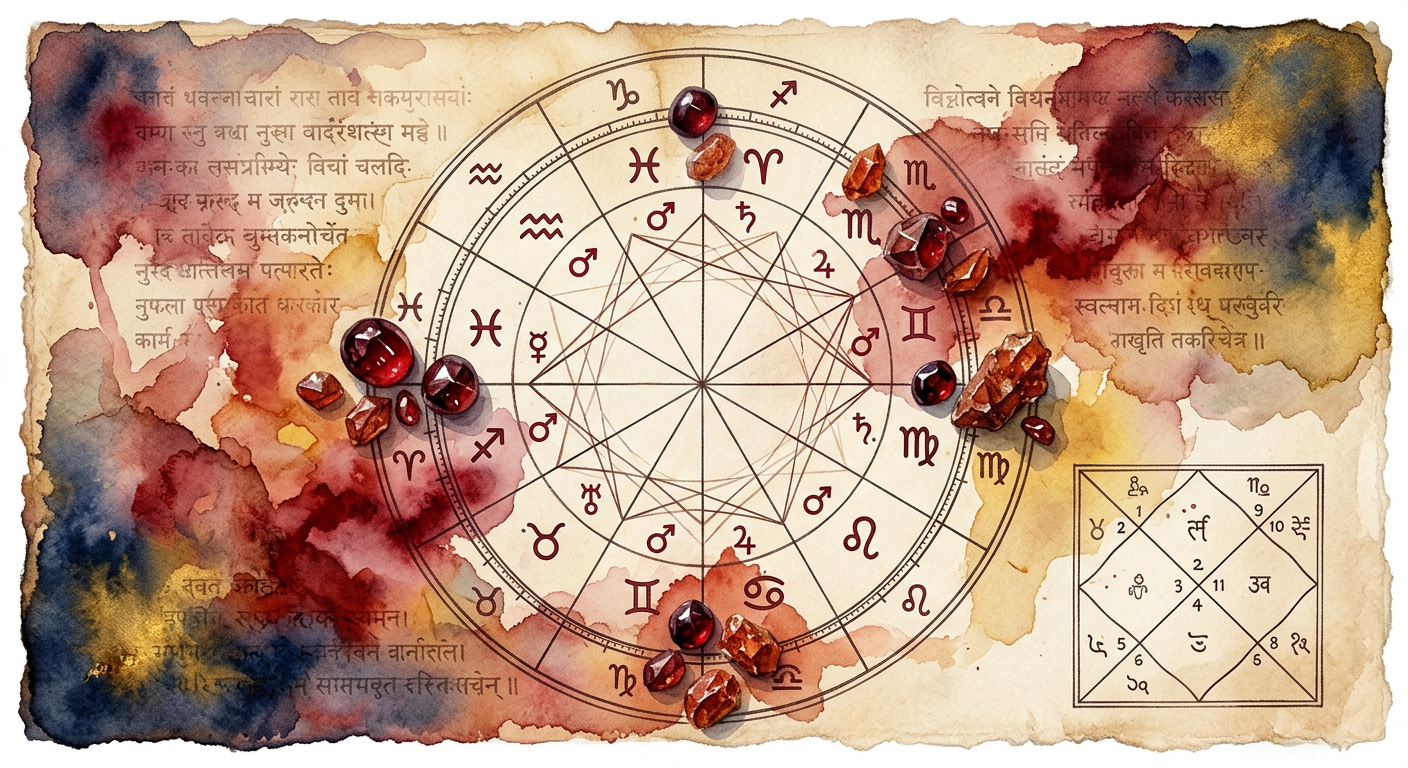
Somewhere in India right now, a family is rejecting a marriage proposal. The boy's qualifications are good, the Guna score is 28 out of 36, the families are compatible — but Mars sits in the 7th house of the girl's birth chart. Manglik. Proposal declined.
This scenario plays out thousands of times a year, and it's built on a foundation that's far more complicated than the binary "Manglik or not" label suggests. The fear surrounding Mangal Dosha marriage compatibility is real, culturally embedded, and — here's the part most people miss — largely operating on an oversimplified version of what Jyotish actually teaches.
So let's get into the actual mechanics. Not the fear. The mechanics.
What Is Mangal Dosha and Why Does It Dominate the Compatibility Conversation?
Mars (Mangal) is the planet of drive, aggression, energy, and assertion in Vedic astrology. When it occupies specific houses in a natal chart, it's believed to create an intensity that can destabilize the marriage partnership — particularly through conflict, dominance, or in classical texts, harm to the spouse.
The term 'Kuja Dosha' (Kuja being another name for Mars) is used interchangeably with Mangal Dosha, and it appears prominently in Jyotish compatibility analysis as a prerequisite check before Guna matching even begins. This is worth pausing on: in the traditional framework, Dosha assessment isn't a tiebreaker. It's a filter that runs first.
And that's why it dominates. If you understand how Vedic astrology identifies compatibility risks that Western methods miss, you'll recognize that Vedic compatibility analysis is layered — it doesn't just ask "do these two people get along?" It asks "what structural risks exist in this partnership?" Mangal Dosha is the most prominent structural risk flag in that system.
But the dominance of this concept in popular culture has created a distorted version of it — one stripped of nuance, cancellation conditions, and intensity gradations.
Which House Placements Create Mangal Dosha?
Classically, Mangal Dosha is formed when Mars is placed in the 1st, 4th, 7th, 8th, or 12th house of the birth chart. Some schools also include the 2nd house, making it a six-house system — though the five-house version is more widely accepted.
Here's what each placement is thought to influence:
- 1st house (Lagna): Mars aspects the 4th, 7th, and 8th houses from here, directly impacting home life, marriage, and longevity of the spouse
- 4th house: Disrupts domestic peace and emotional security within the marriage
- 7th house: Most directly affects the spouse and partnership dynamics — considered highly significant
- 8th house: Linked to the longevity of the spouse, shared resources, and transformation through crisis — often cited as the most intense placement
- 12th house: Associated with bed pleasures, isolation, and expenditure; creates distance and disconnection in intimate partnership
The 8th house placement deserves special attention. In Jyotish, the 8th house governs death, transformation, and the lifespan of the spouse specifically. Mars here doesn't just create conflict — it's classically associated with danger to the partner's wellbeing. This is where the most severe traditional warnings originate.
But here's the thing: Mars in the 7th house in Aries (its own sign) behaves very differently from Mars in the 7th house in Cancer (a sign of debilitation). The house matters. The sign matters. The aspects matter. Most people only hear about the house.
How Mangal Dosha Affects Compatibility Analysis
The Traditional View: Why Two Mangliks Are Recommended to Marry
The traditional prescription is elegant in its logic, even if it's often misapplied. If one partner has Mars in a Dosha-forming house and the other doesn't, the "excess" Mars energy of the Manglik partner is believed to create an imbalance — one person operates with significantly more assertive, competitive, or aggressive energy than the other, leading to friction, dominance, or resentment.
When both partners are Manglik, the theory holds that the Mars energies balance each other out. Neither partner is overwhelmed by the other's intensity. They can meet each other at the same level.
But two Mangliks marrying doesn't mean the Dosha cancels. It means the imbalance is reduced. The individual Dosha effects — impulsiveness, conflict, dominance patterns — can still manifest within the relationship. This distinction gets lost constantly in popular explanations.
Partial vs. Full Mangal Dosha: The Intensity Scale
Not all Mangal Doshas are equal. This is probably the most important concept that fear-based articles consistently omit.
A full or strong Mangal Dosha typically involves:
- Mars in the 7th or 8th house with no beneficial aspects
- Mars in an enemy sign or debilitated
- Mars conjunct other malefic planets (Saturn, Rahu, Ketu)
- Confirmation of the Dosha in the Navamsa chart (D9)
A partial or weak Mangal Dosha might involve:
- Mars in the 1st or 12th house, which many astrologers consider less severe
- Mars in a friendly or own sign within the Dosha house
- Jupiter or Venus aspecting Mars, reducing its malefic quality
- The Dosha present in the Rashi chart but absent in the Navamsa
Think of it as a spectrum rather than a switch. Someone with Mars in the 12th house in Sagittarius (where Mars is in a friendly sign, and the 12th house placement is considered mild) is in a very different situation than someone with Mars in the 8th house in Cancer (debilitated, in the most intense Dosha house).
Cancellations: When Mangal Dosha Is Considered Neutralized
This is where the gap between popular understanding and classical Jyotish becomes most apparent. There are numerous documented cancellation conditions — and most online tools don't check for a single one of them.
Planetary Aspects That Can Cancel the Dosha
Some of the most widely accepted cancellation conditions include:
- Mars in its own signs (Aries or Scorpio): The planet in its own domain is considered to lose much of its malefic quality
- Mars in the signs of Jupiter (Sagittarius or Pisces): Jupiter's expansive, benevolent energy modifies Mars significantly
- Mars aspected by Jupiter: A direct aspect from the great benefic is considered one of the strongest cancellation factors
- Mars conjunct or aspected by the Moon: Softens the aggressive quality of Mars in many classical interpretations
- Benefic planets in the 7th house: Venus or Jupiter placed in the 7th house can neutralize the disruptive effect of Mars elsewhere
- Mars in the 1st house in Aries: The Lagna itself is a strong placement, and Aries is Mars's own sign — many astrologers don't count this as a true Dosha
- If the 7th house lord is strong and well-placed: A strong Darakaraka or 7th lord can protect the marriage even when Mangal Dosha is present
And that's just a partial list. Classical texts like Brihat Parashara Hora Shastra and Phaladeepika contain more nuanced conditions based on the rising sign, the nature of the Ascendant lord, and the disposition of Venus.
Navamsa and Dosha Cancellation Rules
The Navamsa chart (D9) is the divisional chart specifically associated with marriage and the spouse in Jyotish. It's not optional in serious compatibility analysis — it's central.
A Mangal Dosha that appears in the birth chart but is absent in the Navamsa is generally considered significantly reduced. Conversely, a Dosha that appears in both charts is treated as confirmed and more impactful.
Some astrologers apply the rule that Dosha must be present in at least two charts (Rashi + Navamsa, or Rashi + another relevant divisional chart) to be treated as operative. This is a meaningful filter — and it's exactly the kind of check that separates a thorough analysis from a superficial one.
If you're comparing tools, this is a good litmus test: does the calculator examine the Navamsa? Most don't. (This is also why I'd recommend reading about how different Vedic compatibility calculators compare before trusting any single tool's output.)
Mars, Affairs, and Marital Discord: What Jyotish Actually Attributes to Mars
People often ask which planet causes marital problems in astrology. The honest answer is: several can, depending on placement and context. Saturn in the 7th house creates its own challenges — commitment versus burden dynamics that are worth understanding separately. Venus afflicted by Rahu can create relationship instability. But Mars gets the most attention because its effects are the most visible and immediate.
In Jyotish, Mars is specifically associated with:
- Impulsive anger and conflict: Mars-dominant individuals can be quick to fight and slow to forgive
- Dominance patterns: Particularly relevant when Mars is in the 7th house — the Manglik partner may unconsciously try to control the relationship
- Sexual assertiveness: Mars rules desire and physical passion; its placement affects the sexual dynamic in marriage
- Accidents and physical harm: In classical texts, this is where the more extreme warnings about harm to the spouse originate — though modern astrologers interpret this more psychologically
- Separation and divorce: Not because Mars causes people to leave, but because the conflict patterns it creates can erode the relationship over time
What Mars doesn't specifically cause, contrary to popular belief, is infidelity. That's more associated with Venus afflictions, Rahu influence on the 7th house, and certain Moon placements. Conflating Mangal Dosha with affairs is a common misreading.
The Modern Astrologer's View: Is Mangal Dosha Overstated?
| Traditional View | Modern Jyotish Perspective |
|---|---|
| Mangal Dosha is a serious defect requiring remediation | Mars intensity is a trait to be understood and managed, not feared |
| Manglik must marry Manglik | Cancellation conditions can make non-Manglik matches workable |
| Dosha causes harm to spouse | Mars creates conflict patterns; outcomes depend on both charts |
| Binary: you have it or you don't | Spectrum: full, partial, cancelled, confirmed in Navamsa |
| Check Rashi chart only | Rashi + Navamsa required for accurate assessment |
| Guna score can compensate | Dosha analysis is separate from and prior to Guna matching |
Look, there's a legitimate critique here. Studies of marriage outcomes in India — where Mangal Dosha has been a serious filter for generations — don't show clear evidence that Manglik individuals have higher divorce rates or more troubled marriages when matched without another Manglik. The cultural weight of this concept has led to real harm: people with Mars in the 7th house being passed over for marriage, families in distress, and individuals carrying unnecessary fear about their own charts.
And yet — dismissing Mangal Dosha entirely misses something real. Mars is genuinely a powerful, assertive energy. Its placement in partnership-sensitive houses does correlate with specific behavioral patterns that affect relationships. The question isn't whether Mars matters. It's whether the binary, fear-based framing is the right lens.
I think the modern synthesis is correct: Mars placement is a significant factor in compatibility analysis, but it needs to be read in full context — sign, aspects, Navamsa confirmation, cancellation conditions — not as a one-variable verdict.
This is also why Sun sign compatibility is only a fraction of the full picture — and why any serious compatibility assessment needs to go deeper than surface-level planet placement.
How to Check for Mangal Dosha in a Compatibility Calculator
If you want to actually assess Mangal Dosha properly — rather than just getting a yes/no flag — here's what to look for in any tool or consultation:
Confirm the house placement: Which of the five (or six) houses does Mars occupy? Note that some calculators use different house systems.
Check the sign: Is Mars in a friendly sign, own sign, exalted, neutral, or debilitated? This directly affects intensity.
Look for aspects: Does Jupiter, Venus, or the Moon aspect Mars? This is a critical cancellation check.
Examine the Navamsa (D9): Does the Dosha appear in the Navamsa chart as well? Confirmation in both charts = stronger Dosha. Absence in Navamsa = reduced severity.
Check both partners' charts: Is one partner Manglik and the other not? Or are both Manglik? The relative Mars positions matter for compatibility specifically.
Look at the 7th house lord: Is the lord of the 7th house well-placed and strong? A strong 7th lord provides protection.
Consider the full Ashtakoot score: Guna matching is a separate assessment. A high score doesn't cancel Dosha, but a full picture requires both analyses.
You can check for Mangal Dosha in your compatibility report to see how these factors stack up in your specific chart combination. The key is not to take a single data point — Mars in the 7th house — and build a verdict around it without examining the surrounding context.
This same contextual principle applies across Vedic compatibility analysis. If you're working without a birth time, for instance, the approach to Vedic compatibility without exact birth time requires different methods entirely, and Dosha assessment becomes more approximate.
The bottom line isn't "don't worry about Mangal Dosha." It's "worry about it correctly." Mars in a Dosha-forming house is a real signal worth examining. But it's one signal in a complex system — and treating it as a veto without examining cancellation conditions, intensity gradations, and Navamsa confirmation is like rejecting a job candidate because one reference was mediocre without reading the other five.
Get the full picture. That's what the tradition actually asks for.